solv
designing for trust, simplifying growth for Indian SMEs
00
problem
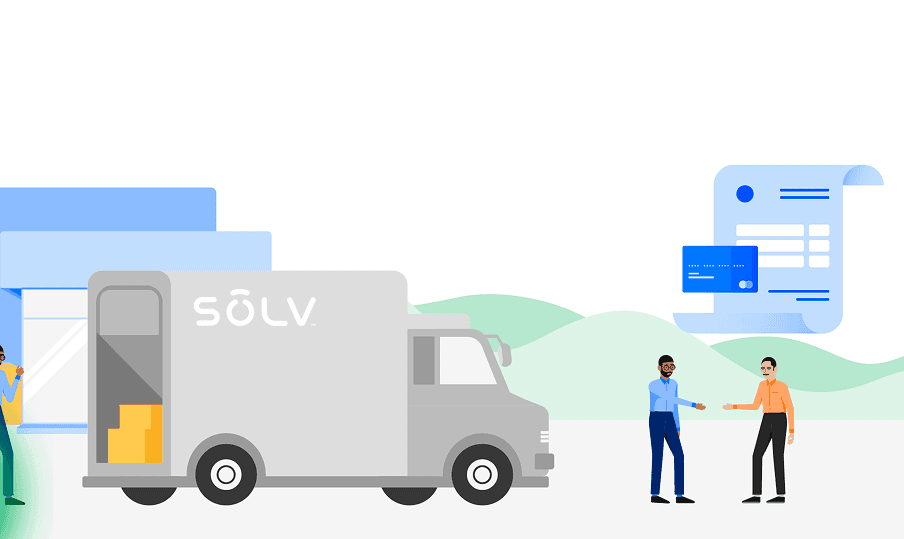
Indian B2B buying means messy catalogs, multi seller baskets, credit heavy orders, and offline habits across many categories. solv started as a conversation commerce app but had weak discovery, and fragmented experiences for buyers, sellers, field, and ops.
solution
redesigned Solv around a multi entity cart with clear order states shared by every app. rebuilt discovery with server driven UI, a new Feet on Steet Buddy app, an aligned seller portal and host of internal ops tools so everyone sees the same reality.
designing a b2b marketplace that survived real world trade
website: solvezy.com
role: early design consultant → senior manager II
actual role: de facto head of design (2022 → acquisition), reporting to CEO + CTO
what i owned: buyer commerce app end-to-end, discovery rebuilt with server-driven UI, design systems across surfaces, seller app + seller portal (v1 and later revamp), buddy (field sales app), and key platform + ops tools (QC, campaigns, OMS, IMS, discounts), plus finance touchpoints (SCF, BNPL)
scale (internal): ₹5,400 Cr+ lifetime GMV, 400,000+ retailers onboarded
the premise
B2B procurement is repeat buying with constraints.
credit. moving prices. uncertain stock. delivery exceptions. substitutions. partial fulfilment.
when order states don’t match reality, trust collapses.
the product solv started as
when i joined in oct 2019, the commerce app was early and the design team was deep in finance and SCF tools. solv’s first bet was conversation commerce.
i designed the mvp with chat-led buying that mirrored real trade.
seller connections. negotiation flows. partial payments. credit days.
it was a reasonable thesis, we launched in 2020 then the market showed us what mattered.
the turning point
after launch, users appropriated the product.
they didn’t chat to buy.
they used chat as a wrapper.
they built a purchase order inside chat.
then they asked for it to work across sellers.
tracking orders was difficult, discovering products even more so.
that was the signal: solv didn’t need more conversation. it needed a procurement engine.

how i drove decisions
research drove our decisions and cadence. it was how we operated.
on the ground
customer phone calls and user interviews to learn how retailers discover, compare, reorder, and handle exceptions
seller interviews and contextual inquiry, especially during the later seller portal revamp, to understand catalog, pricing, inventory, invoicing, and dispatch in real workflows
buddy research through interviews and field feedback with SOs and TLs to ensure flows fit visit routines and low-network conditions
in the data
moengage funnels across discovery → cart → checkout → payment → order placed
feature usage to separate loud feedback from real behavior
failure events and reason codes to understand cancellations, returns, payment errors, and delivery misses
voice of customer data from support tickets and calls.
when opinions conflicted, we used evidence to decide.
the pivot i owned
trust + cart became the backbone
i took ownership of the buyer commerce app.
1) trust-first onboarding
i redesigned onboarding so solv was clearly for verified businesses. what we baked into the experience:
“why this is needed” copy for each document
progress visibility so it didn’t feel endless
strong confirmation states once verified, carried into discovery flows
guardrails that stopped non-business usage from polluting the platform
2) multi-seller cart built for constraints
we built a procurement-grade cart:
multi-seller ordering as the default
MOV (min. order value) and business constraints shown early
a purchase-order mental model, not consumer shopping
serviceability, inventory checks re-inforced
volume and cart based offers
this pivot changed the center of gravity of the product and unlocked the marketplace build-out. each component carefully designed to support all edge cases and user flows.

marketplace rebuild
discovery → checkout → orders
once trust and cart were solid, i rebuilt the buyer experience end-to-end:
discovery
home, browse, search
plp/pdp designed for b2b decisions
seller stores that made suppliers easy to compare
consistency across categories so the experience didn’t fragment
commerce core
cart and checkout
payments and advance payments
order management with clear statuses and next actions
cancellations, tracking, refunds designed as first-class flows
scaling discovery with server-driven UI
as categories expanded, static screens became a bottleneck. i rebuilt discovery with server-driven UI so we could ship category layouts faster, tune merchandising without app releases, and keep patterns consistent while letting each category work the way it needs to.
example: grocery and softlines needed different “first screen” priorities in different cycles. with sd-ui, we could change layout and modules server-side without waiting for client updates

server-driven UI became a practical scale tool: faster iteration without UI chaos. layouts, merchandising rules, and component variants were controlled via config; mobile app rendered schema-validated UI.

the work behind the screens
QC, OMS, IMS, offers/campaigns
a B2B marketplace only feels simple when internal systems are strong. this work protected reliability.
QC + catalog governance: quality gates before items go live, fewer broken PDPs and bad variants
IMS (inventory): helped designers to create inventory system tied to fulfilment realities, fewer “available but not deliverable” outcomes
OMS (orders): helped product & design team revamp OMS, shared order states across buyer, seller, field, and ops; helped design exception handling for all fulfillment methods, returns, refunds and cancellations
campaigns + offers: campaign tooling and slab schemes that reduced manual ops work and spreadsheet + PSR dependence
seller + field surfaces
seller app + seller portal
i led early seller UX so sellers could manage day-to-day execution: catalog readiness, pricing/inventory updates, order processing, invoicing, and dispatch steps. later, i supported a seller portal revamp grounded in seller interviews and contextual inquiry.

buddy (field sales)
i directed buddy’s product direction and helped guide product and design decisions. kept it aligned with the same onboarding, order and state truth as buyer and ops tools. primary users of buddy are team leads (TLs) and sales officers (SOs), who are the pillar of solv's growth story.

what we designed around:
low-network conditions and fast visits
clear visit workflows for SOs and TLs
verification steps that matched how field teams actually work
feedback loops that improved buyer and seller data quality over time
geo-checkins to maintain on ground integrity
clear daily, weekly and monthly targets with tracking
design leadership (2022 → acquisition)
from 2022 onward, i led solv design in practice as head of design while holding the title senior manager II.
worked directly with leadership on priorities and tradeoffs
drove design system adoption across surfaces
kept the commerce model consistent across buyer, seller, field, and ops
made decisions fast during churn, without letting the product fragment
in b2b, inconsistency kills trust.
impact highlights (internal)
platform scale
₹5,400 Cr+ lifetime GMV
400,000+ retailers onboarded
grocery reliability improved
return-of-goods improved from ~8% (oct 2022) → <5% (jan 2023) → <4% (feb–mar 2023)
gmv-to-delivered improved to ~90% by feb–mar 2023
category momentum examples
grocery oct 2022: ₹125 Cr GMV, 26,000 30-day transacting buyers, 1.8 lakh transactions
consumer electronics: 2,000+ active sellers in a month, AOV ₹4,800, deliveries reaching 83% in jan 2023
toys & sports launch: 70+ sellers, 500+ buyers, 2,700+ SKUs in month 1
what i’d want you to take away
i let real usage decide product direction, not preference.
i built for constraints and order truth, not just flow polish.
i treated qc, oms, ims, logistics and admin + ops tools as core product work.
from 2022 onward, i owned design direction with CEO + CTO and kept the system coherent through scale and churn.
currently, i'm leading the design integration efforts for solv + jumbotail b2b platforms, post the acquisition of solv in 2025.
see also